
Start with the hazard
Moving parts, ejection, trapping, heat, stored energy and process-specific risks.
Custom machine guarding · Great Britain
Custom-designed steel, stainless-steel, mesh and clear-panel guards manufactured to your requirements—from first survey to completed handover.
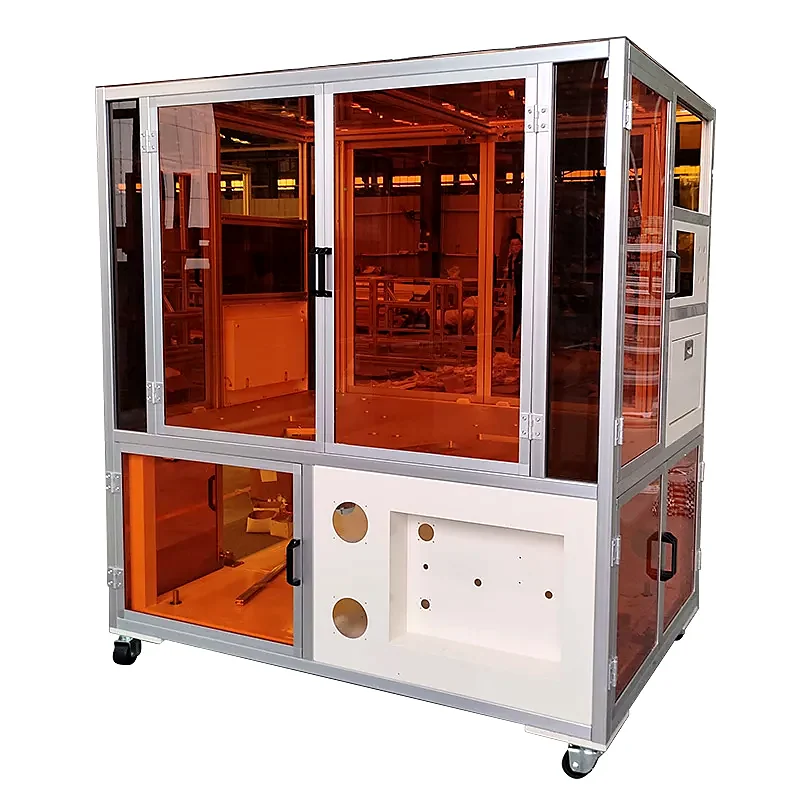
Designed around your operation
The best guard is not simply a barrier. It controls access to the hazard while supporting production, cleaning, adjustment, fault recovery and maintenance.
Oxford Machine Guarding develops the physical structure, access strategy and safety-system interface as one project. That means the choice between fixed panels, doors, removable sections, interlocking and visibility begins with how the machine is actually used.
Moving parts, ejection, trapping, heat, stored energy and process-specific risks.
Operating, loading, changeover, cleaning, fault recovery and engineering access.
Fixed separation, monitored access, guard locking, reset and restart behaviour.
Guard materials
Many projects combine several materials. The final selection follows the hazard, access, visibility, containment, cleaning and durability requirements.
 01
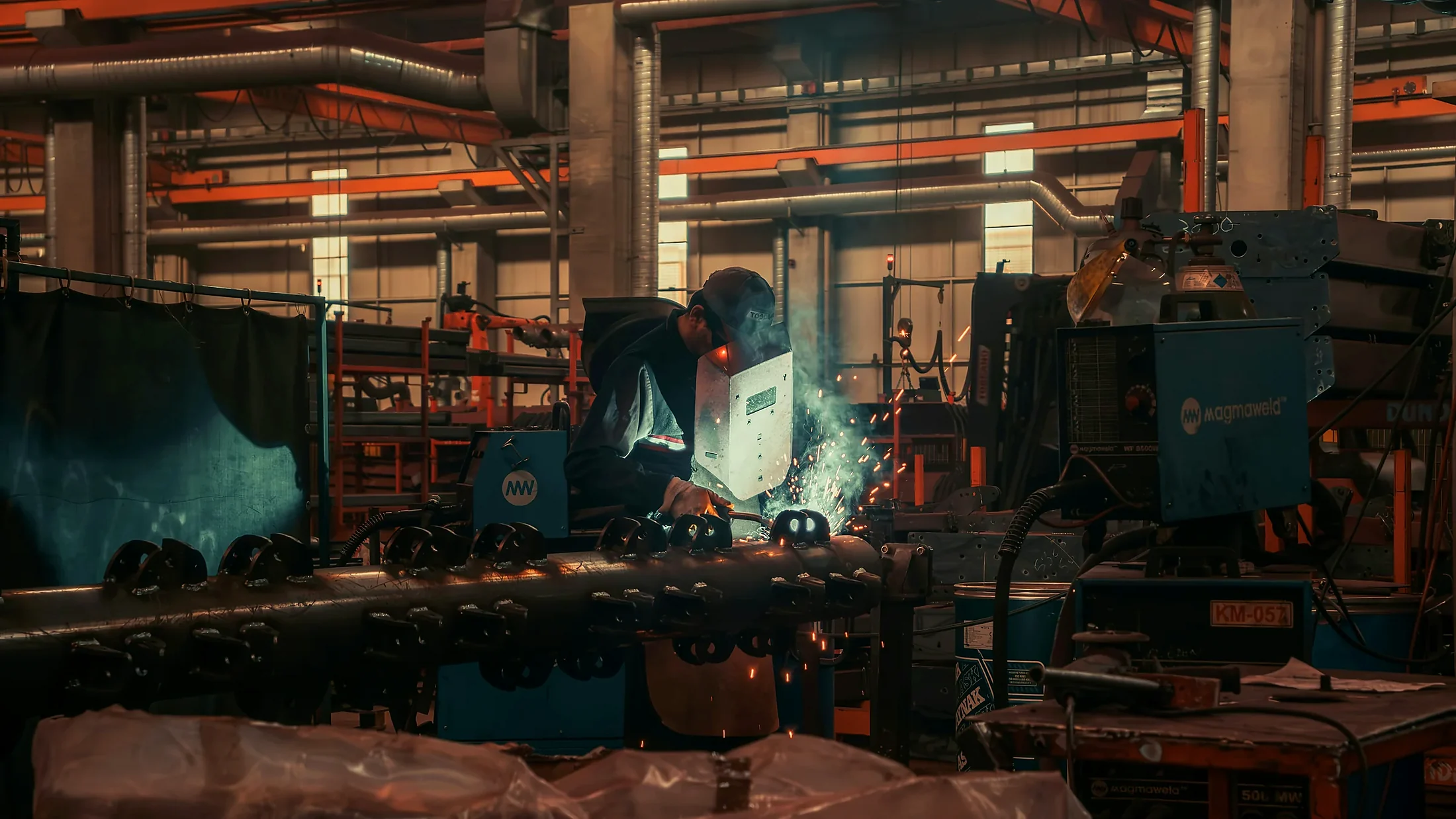
Robust fabricated protection
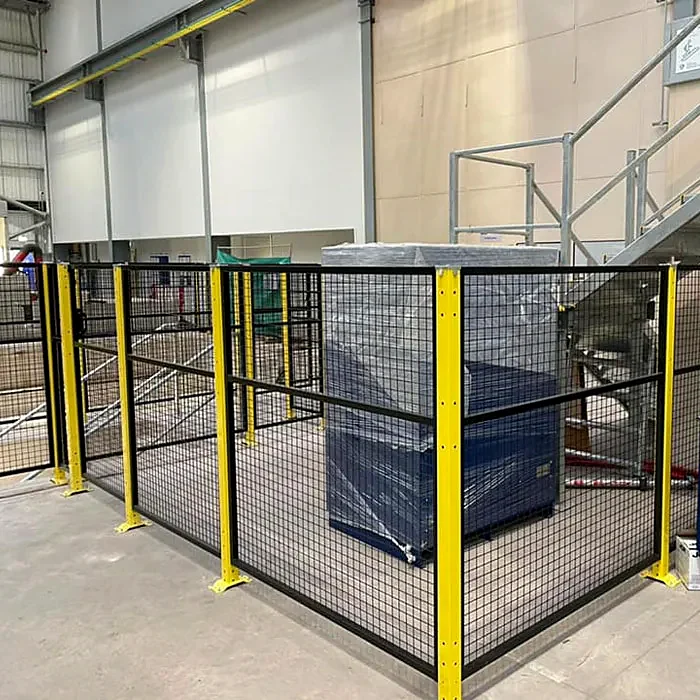
Illustrative mesh enclosure; material is specified for each project.
02Hygienic and corrosion-resistant guarding
 03
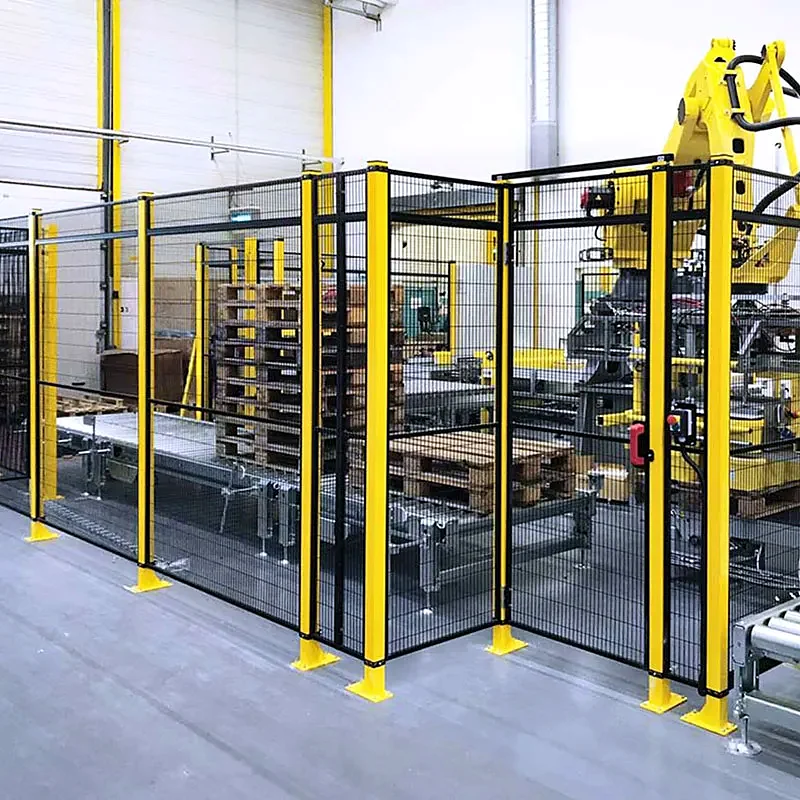
Visibility and ventilation with physical separation
04High visibility and process containment
Machine guarding solutions
Dedicated engineering pathways for common industrial guarding projects, each planned around the hazard, task and production environment.
Perimeter panels, controlled gates and safety-device interfaces around industrial robots and automated cells.
Explore robot guarding ↗02 · Material flowGuards for nip points, drives, transfer zones, cleaning access and connected production equipment.
Explore conveyor guarding ↗03 · Safety fencingBespoke barriers and access gates shaped around automated machinery, floor space and safe distance.
Explore perimeter guarding ↗04 · Existing equipmentSurvey-led retrofit guarding for older, modified, damaged or incompletely guarded machinery.
Explore PUWER upgrades ↗Bespoke fabrication
Purpose-designed frames and panels can follow existing machinery, restricted floor space, product flow and maintenance clearances.
One accountable pathway
The scope is agreed before detailed work begins so responsibilities, interfaces and evidence remain clear.
Capture machine geometry, hazards, access tasks, stopping behaviour, environment and project constraints.
Develop the guard line, materials, doors, removable sections and safety-device interfaces for review.
Fabricate the agreed steel, stainless, mesh and clear-panel elements with the specified finish and hardware.
Fit the guarding, complete agreed checks and provide the drawings and project information included in the scope.
Industry applications
Guards for fillers, cappers, labellers, wrappers, cartoners and connected conveyors—planned around changeover and replenishment.
Cleanable stainless-steel and clear-panel guarding developed around hygiene zones, washdown and production access.
Controlled-access guarding for inspection, packaging and automated handling where visibility, cleanability and documentation matter.
Perimeter guarding, access gates, interlocks and presence-sensing interfaces for industrial robots and automated cells.
Robust fabricated protection around pressing, cutting, machining, forming, swarf and potential ejection hazards.
Machine-specific access and enclosure solutions for moulding, trimming, handling and downstream automation.
Compliance by design
Effective guarding also depends on reach distance, openings, access frequency, stopping performance, interlocking and prevention of unexpected restart. The applicable requirements are identified for the machine and agreed modification scope.
Frequently asked
These are general answers. The machine-specific review determines the final safeguarding approach.
Ask the engineering teamOverall photographs, machine dimensions, hazard locations, normal operating and maintenance tasks, required access, site location and any existing risk assessment or control information are a useful starting point. We can then advise whether a desktop review or site survey is appropriate.
Yes. Existing machinery can often be upgraded with fixed panels, access doors, interlocking and associated control modifications. The scope depends on the machine condition, intended use, stopping behaviour and a project-specific risk review.
There is no single best material. Coated steel provides robust fabrication, stainless steel suits hygienic or corrosive areas, mesh preserves airflow and visibility, and clear panels support close observation and containment. Many projects combine several materials.
That depends on the risk, access frequency, machine stopping time and whether a person could reach the hazard before it becomes safe. Some movable guards require interlocking or guard locking; fixed or tool-removable panels may be appropriate elsewhere.
Installation and functional checks can be included in the agreed scope. Oxford Machine Guarding supports projects throughout Great Britain from initial survey through design, manufacture, installation and handover.
Start with the machine and the task
Send photographs, dimensions or a short description of the machine. We will help define the survey, design and installation scope.
A survey should turn an exposed hazard and the tasks around it into an agreed safeguarding brief. The useful output is a reviewed guard arrangement, access strategy and project boundary, with open decisions identified before fabrication.
Mark where operators load, observe, adjust, clean and recover faults, and where maintenance staff need access under safe isolation. Record frequency and the space required for those tasks. Separate the need to see a process from the need to reach it; this can change the proposed panel and door arrangement.
HSE guidance normally starts with fixed guarding to prevent access, with interlocked access considered where routine access is needed. The machine-specific review must determine the suitable arrangement. Include stopping behaviour, stored energy and how access affects reset and restart; a door specification alone does not define the complete safety function.
Review reach over, under and around guards as well as through openings. Include product transfers, floor gaps, service penetrations and interfaces to neighbouring equipment. Ask the designer to identify the assessment needed for those features rather than selecting panel openings or distances from appearance alone.
List retained guards, proposed structures, mounting work, controls changes and site responsibilities. Define the drawings, inspections and functional checks included in acceptance. Record who will close findings before the modified machine is returned to operation and how future removal or alteration will be controlled.